
Why Are Regular Eye Exams Important?
Regular eye exams help us monitor changes in your eyes, so concerns can be detected early and addressed to preserve healthy vision. Seeing your eye health in detail helps us individualize your care and create a customized treatment plan for your vision and lifestyle needs.
Eye exams are available for all ages, including exams focused on specific eye problems or prescriptions, such as people with diabetes and those with contact lenses.
How Often Do I Need an Eye Exam?
Most people should have a comprehensive eye exam every one–two years, but your doctor can tell you what’s right for you. In general:
- Adults should have an eye exam typically every one–two years
- Children should have annual eye exams until eighteen years of age
- People with diabetes should have an eye exam annually
- People who wear contact lenses should have annual eye exams
What to Expect in a Comprehensive Eye Exam
Prior to your eye exam, we will discuss your medical history and any vision issues you may be experiencing. A variety of tests are then performed to help determine how clearly and comfortably you can see. Some tests may require the dilation of your pupils. Once testing is completed, your doctor will discuss your eye health and recommendations for your care.
Eye Muscle Test
Each eye has six muscles working together to control position and movement. Examining how your eyes move following a light or object helps us determine the strength of your eye muscles.
Visual Acuity Test
Both eyes are tested to see how accurately they can read letters at a distance from largest to smallest. For smaller children who cannot yet read, symbols may be used.
Refraction Assessment
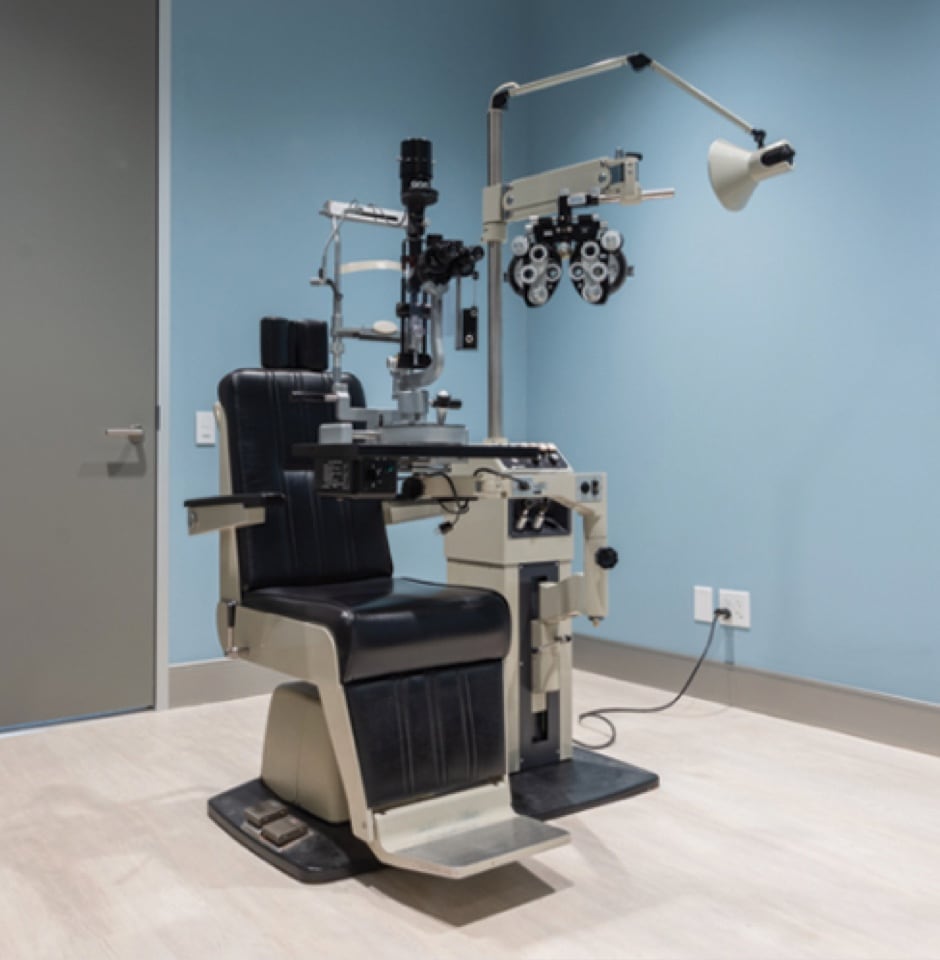
A computerized refractor or a technique called retinoscopy is used to assess refractive errors—a poor focusing ability causing blurry near or far vision. The assessment helps us determine a lens prescription to offer you precise and comfortable vision. A phoropter may be used to refine the assessment, using a combination of lenses to provide the sharpest image.
Visual Field Test
Peripheral vision is what you can see out of the corner of your eye. Visual field testing determines any areas of difficulty in your field of vision. Weak spots or loss of peripheral vision can indicate developing eye conditions, such as glaucoma.
Colour Vision Testing
Colour vision is assessed with a test displaying multi-colored dot-patterns. Your doctor will ask you to identify patterns within the dots to evaluate any difficulties.
Slit-Lamp Examination
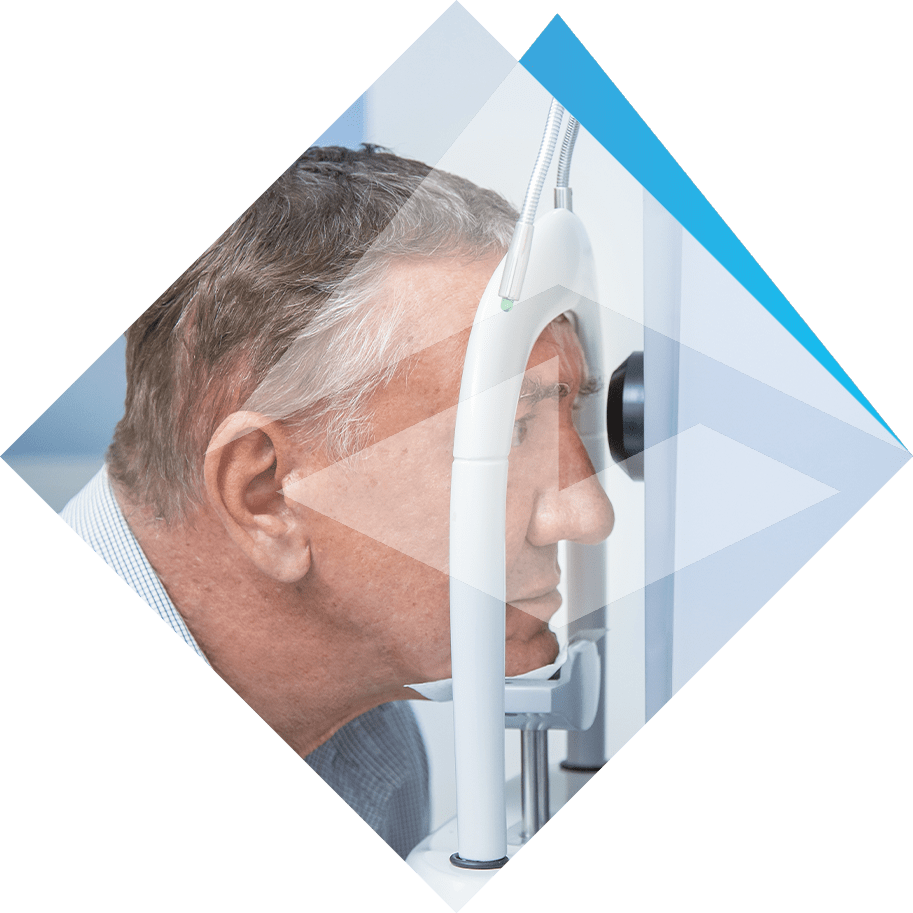
A slit-lamp (microscope and light) is used to examine the front of your eye in detail. This allows your doctor to easily examine your lashes, eyelids, lens, cornea, iris, and anterior chamber (fluid-filled space between your cornea and iris).
Your doctor may use a dye called fluorescein when examining your cornea. The dye colors the moisture layer (tear film) over your eye in order to highlight any damaged cells.
Retinal Examination
Also known as ophthalmoscopy or funduscopy, retinal examinations focus on tissue at the back of the eye. This includes your retina, optic disk, and choroid (the layer of blood vessels supplying nutrients and oxygen to the eye).
Screening for Glaucoma
Glaucoma is a disease that damages the optic nerve. Measuring intraocular pressure (the fluid pressure inside your eyes) can help us determine if the eye tissue is at risk of deterioration. Your doctor will also examine your optic nerve for signs of damage.
Your Child’s Eye Exam
During your child’s eye exam they will be tested for myopia (nearsightedness). If myopia is detected, we may recommend myopia control. It’s important for your child to have regular eye exams to detect vision problems early, so they can receive appropriate care to preserve their sight.
Diabetic Eye Exams
Regular diabetic eye exams are an important part of managing your health. Regular check-ins help your eye care team pick up on changes in your eyes as they develop, allowing your care to be tailored to your individual needs.
One condition that your doctor will screen for is diabetic retinopathy. The sight-threatening condition occurs when high blood sugar causes changes in the small blood vessels in the retina. An optical coherence tomography (OCT) test can detect damaged blood vessels at the back of the eye.
Contact Lens Exams
A contact lens prescription is different from glasses in the lens power required and the fitting process. Many styles and designs are available, allowing more patients to find a match for their individual prescription, comfort, and lifestyle.
Even if you haven’t had success finding comfortable contact lenses in the past, we can work with you to find a custom fit for your eye health and vision.
We’re Your Eye Health Resource
Prism Eye Institute strives to serve patients as a comprehensive resource for eye care and education. We want you to feel informed about your visual health, from in-depth discussions to detailed technology-assisted diagnoses.
If you are currently under the care of an eye doctor, please make an appointment with their office. For questions about referrals for our services, reach out to our staff and request an appointment.


Our Locations
Brampton
- 7700 Hurontario Street, Unit 605
- Brampton, Ontario L6Y 4M3
Monday to Saturday: by appointment only
OUR HOURS
- Monday: 7:30 AM – 6:00 PM
- Tuesday: 7:30 AM – 6:00 PM
- Wednesday: 7:30 AM – 6:00 PM
- Thursday: 7:30 AM – 6:00 PM
- Friday: 7:30 AM – 6:00 PM
- Saturday: 8:00 AM – 2:00 PM
- Sunday: Closed
Mississauga-Oakville
- 2201 Bristol Circle, Suite 100
- Oakville, Ontario L6H 0J8
Monday to Saturday: by appointment only
OUR HOURS
- Monday: 7:30 AM – 6:00 PM
- Tuesday: 7:30 AM – 6:00 PM
- Wednesday: 7:30 AM – 6:00 PM
- Thursday: 7:30 AM – 6:00 PM
- Friday: 7:30 AM – 6:00 PM
- Saturday: 8:00 AM – 2:00 PM
- Sunday: Closed
Our Brampton


Our Mississauga-Oakville
Gallery