

Solutions for Your Unique Needs
Every person’s eyes are unique, so we work with you to find the right type of contact lens for the shape of your eyes, your prescription, your lifestyle, and your comfort.
With our modern technology and years of experience, our team can help you find custom and specialty contact lenses. You may have been told your eyes are “hard to fit,” or you’ve struggled with contacts in the past. We want to help patients with unique needs, like keratoconus or dry eye, find solutions.
How Technology Enhances Fit
Technology can make a significant difference in finding a comfortable, proper fit. A pebble in your shoe might be a tiny problem, but it can change the way you walk or stand. Similarly, your eye’s surface can have uneven curves, impacting how your lenses fit, feel, and perform. Corneal topography can map those tiny details to improve fit.
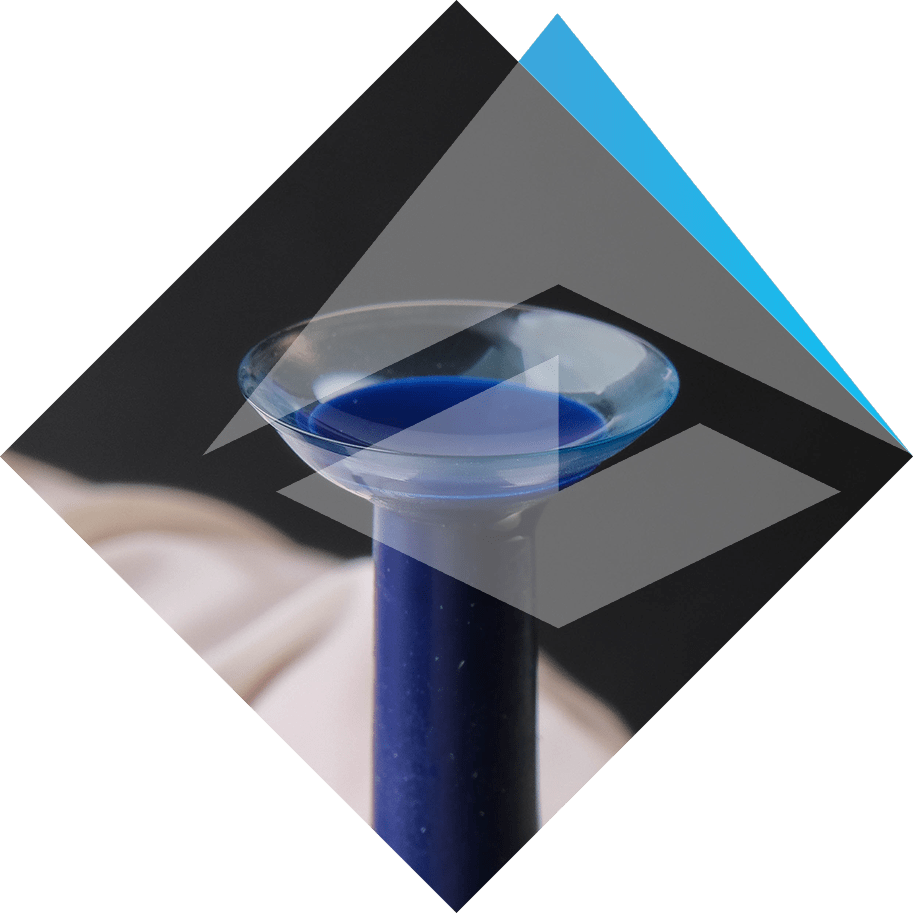
OPD-Scan III
The OPD-Scan III is a vision-assessment system we use to evaluate the eye for specialty contact lens fittings. The system combines multiple scans and tests, allowing us to map the eye’s surface, measure pulp response, and evaluate refraction (how the eye focuses light).
Assessing the eye in-depth helps improve our accuracy when determining your prescription and fit, whether you have hard-to-fit eyes or individual health needs.
Types of Specialty Contacts
At Prism Eye Institute, we carry various specialty contact lens types. We want to offer our patients more choices when caring for their vision. Every healthy, comfortable fit starts with a contact lens exam, whether you’re a match for standard or specialty lenses.
Comprehensive eye exams assess eye health and glasses prescription, but a contact lens exam specifically evaluates factors crucial to contact lens wear. If you already have an optometrist, they may offer contact lens exams, or they may refer you to a provider.
Aspheric Lenses
Standard contact lenses have a pronounced curved or spherical shape, similar to a ball. Aspheric lenses optimize the lens shape with flatter edges, allowing the lens to be thinner even with higher prescriptions. As a result, the lens can adapt better to the eye’s shape, avoiding spherical aberrations (when light is poorly focused, resulting in blurred vision).
Aspheric lenses can improve visual performance, so you can see sharper images.
Hybrid Lenses
Hybrid contact lenses combine traits from soft and rigid gas permeable (hard) contact lenses. The lenses feature the comfortable outer skirt of a soft lens and the firm centre of a rigid lens (improving clarity). A hybrid lens also allows more patients who are a poor fit for soft contact lenses to enjoy enhanced comfort without sacrificing visual performance.
Multifocal Lenses
There are two types of lenses referred to as multifocals: myopia control for children and multifocals for correcting multiple distances.
Multifocals for myopia control help slow eye growth in children to prevent worsening myopia (nearsightedness). These are a low-maintenance, soft contact lens option for children aged eight and up.
Multifocals for adults contain multiple prescriptions for correcting near, far, or middle-distance vision. Bifocals are a common type for people with presbyopia, as the dual prescription corrects near and far vision within one lens.
Ortho-k
Orthokeratology (ortho-k) is a myopia control method using rigid gas permeable (hard) contact lenses. Your child wears the lenses overnight, allowing the rigid shape to gently reshape the eye. Then, the contact lenses are removed in the morning, and your child can experience corrected vision throughout the day (without wearing glasses or daytime contact lenses).
Scleral lenses
Scleral lenses feature a larger diameter, allowing the lens to rest on the sclera (white of the eye) rather than the highly-sensitive cornea (clear front of the eye). The design creates a moisture-filled chamber, improving surface moisture and oxygen flow, and promoting healing and comfort.
People with irregular corneas, keratoconus, or dry eye looking for a contact lens option can benefit from scleral lenses. The rigid shape and moisture chamber improve visual performance and protects eye health.
Toric Lenses
Torics or toric contact lenses are designed for people with astigmatism (irregular cornea surface causing blurred vision). People with astigmatism need the lens to stay in an optimal position to correct the uneven cornea. Torics feature zones to help rotate the lens into position, so you can blink freely without shifting the lens.
Contact Us to Find Your Fit
Looking for new lenses or not happy with how your current lenses fit? Talk to your current optometrist to discuss specialty contact lenses, and they can refer you to Prism Eye Institute. We also welcome patients with questions about specialty, custom-fit lenses to request an appointment. We’re happy to answer your questions!


Our Locations
Brampton
- 7700 Hurontario Street, Unit 605
- Brampton, Ontario L6Y 4M3
Monday to Saturday: by appointment only
OUR HOURS
- Monday: 7:30 AM – 6:00 PM
- Tuesday: 7:30 AM – 6:00 PM
- Wednesday: 7:30 AM – 6:00 PM
- Thursday: 7:30 AM – 6:00 PM
- Friday: 7:30 AM – 6:00 PM
- Saturday: 8:00 AM – 2:00 PM
- Sunday: Closed
Mississauga-Oakville
- 2201 Bristol Circle, Suite 100
- Oakville, Ontario L6H 0J8
Monday to Saturday: by appointment only
OUR HOURS
- Monday: 7:30 AM – 6:00 PM
- Tuesday: 7:30 AM – 6:00 PM
- Wednesday: 7:30 AM – 6:00 PM
- Thursday: 7:30 AM – 6:00 PM
- Friday: 7:30 AM – 6:00 PM
- Saturday: 8:00 AM – 2:00 PM
- Sunday: Closed
Our Brampton


Our Mississauga-Oakville
Gallery